
Wood Staining in Vaughan — Changing the Tone Without Hiding the Timber
Stain colours wood rather than covering it. That is the whole appeal and the whole limitation — there has to be something worth seeing underneath.
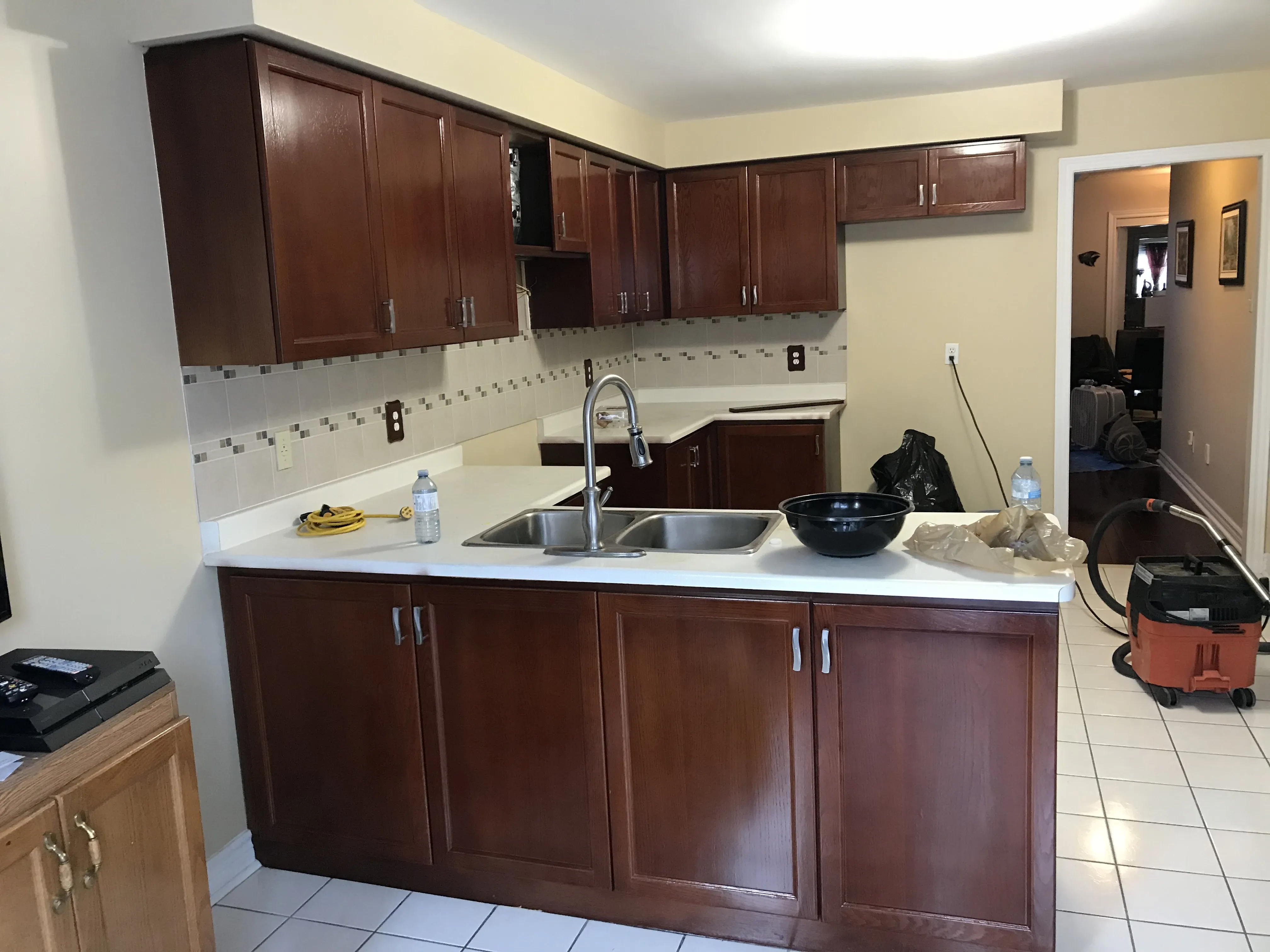
Solid wood
The only substrate this works on
Darker only
Stain cannot lighten timber
Clear 2K
Over the stain, not instead of it
4.9
Rated on Google
What staining is for
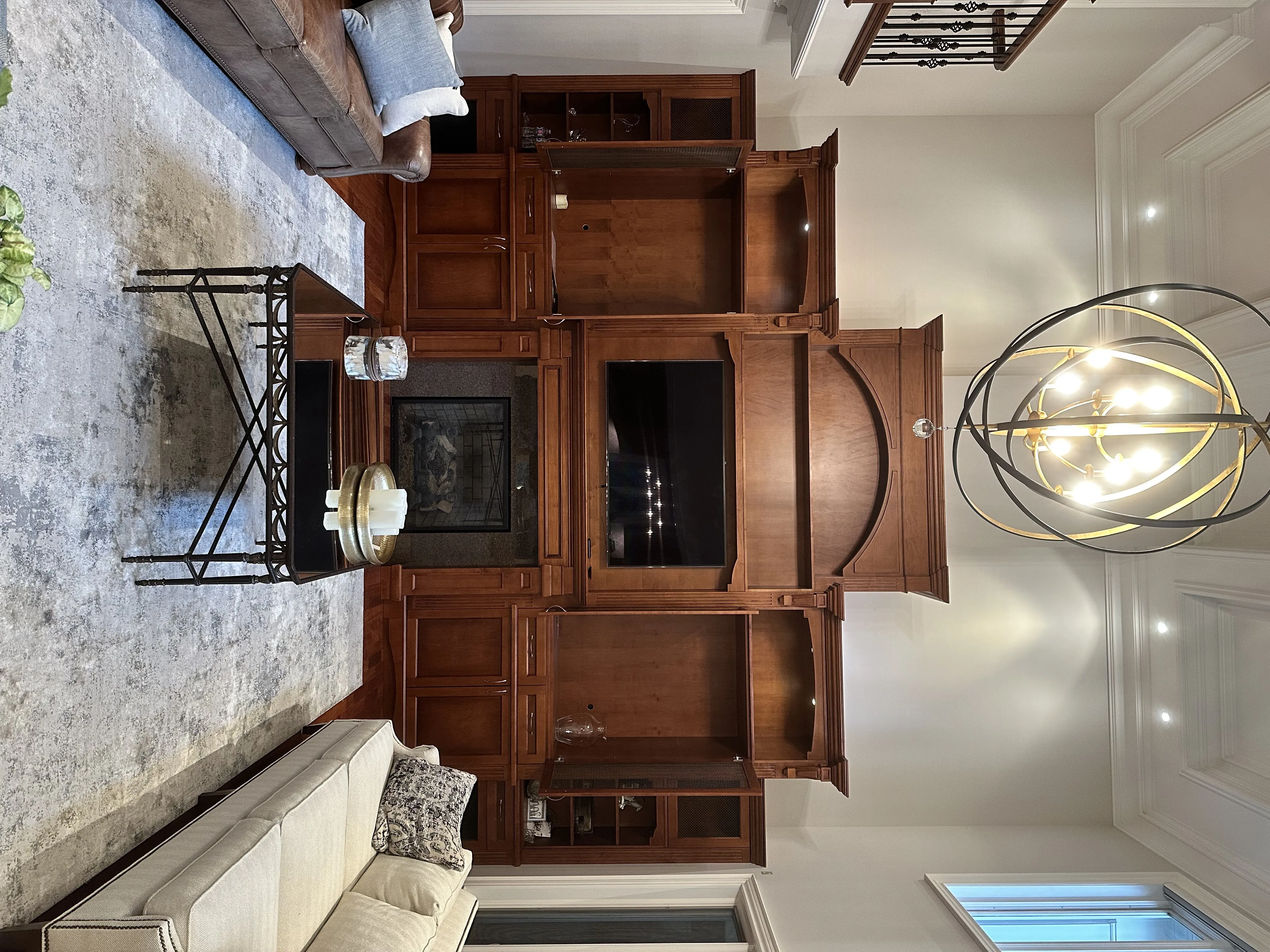
There is a kind of wood that should not be painted. Rift-cut white oak with the medullary rays showing, a walnut panel with figure in it, an old fir door with sixty years of grain — cover any of that and you have thrown away the thing that made it worth having.
Staining is the service for wood worth looking at. It changes the tone while leaving the figure visible, and the finish over it adds depth rather than concealing anything.
It is also, honestly, the service we recommend least often, because most of what people ask us to stain turns out to be veneered, engineered or softwood — and each of those has a different answer.
The one hard limit
Stain goes darker. It never goes lighter. Every conversation about this service eventually arrives at that sentence, and it is worth arriving at early.
Colour is added to timber, not subtracted from it. A honey oak kitchen can become a walnut one. A walnut one cannot become a honey oak one. Stripping the old finish removes some accumulated surface colour and occasionally that alone is a transformation — a great deal of the orange people dislike in nineties oak is an amber lacquer that has yellowed rather than the wood beneath it — but stripping is not bleaching.
Where somebody genuinely wants a paler kitchen out of dark timber, the answer is paint, and we say so rather than taking the job and disappointing everyone at the end of it.
Why it has to be stripped first
Stain works by penetrating. It has to reach open timber, which means every trace of the old lacquer, varnish or oil has to come off before any colour goes on.
That is the expensive part and it cannot be shortened. Chemical stripper, dwell time, scraping, neutralising, then sanding through the grits — and on a moulded or raised-panel door, the corners where the old finish is thickest are exactly where no machine reaches. It is hands and hours.
Anything sold as staining that does not involve stripping is a tinted topcoat: a translucent varnish sitting on the old surface. It looks acceptable for a while, it is not repairable, and it fails as a film rather than wearing as a finish.
This is why staining is priced closer to refinishing than to painting. The two are nearly the same job.
What goes on top
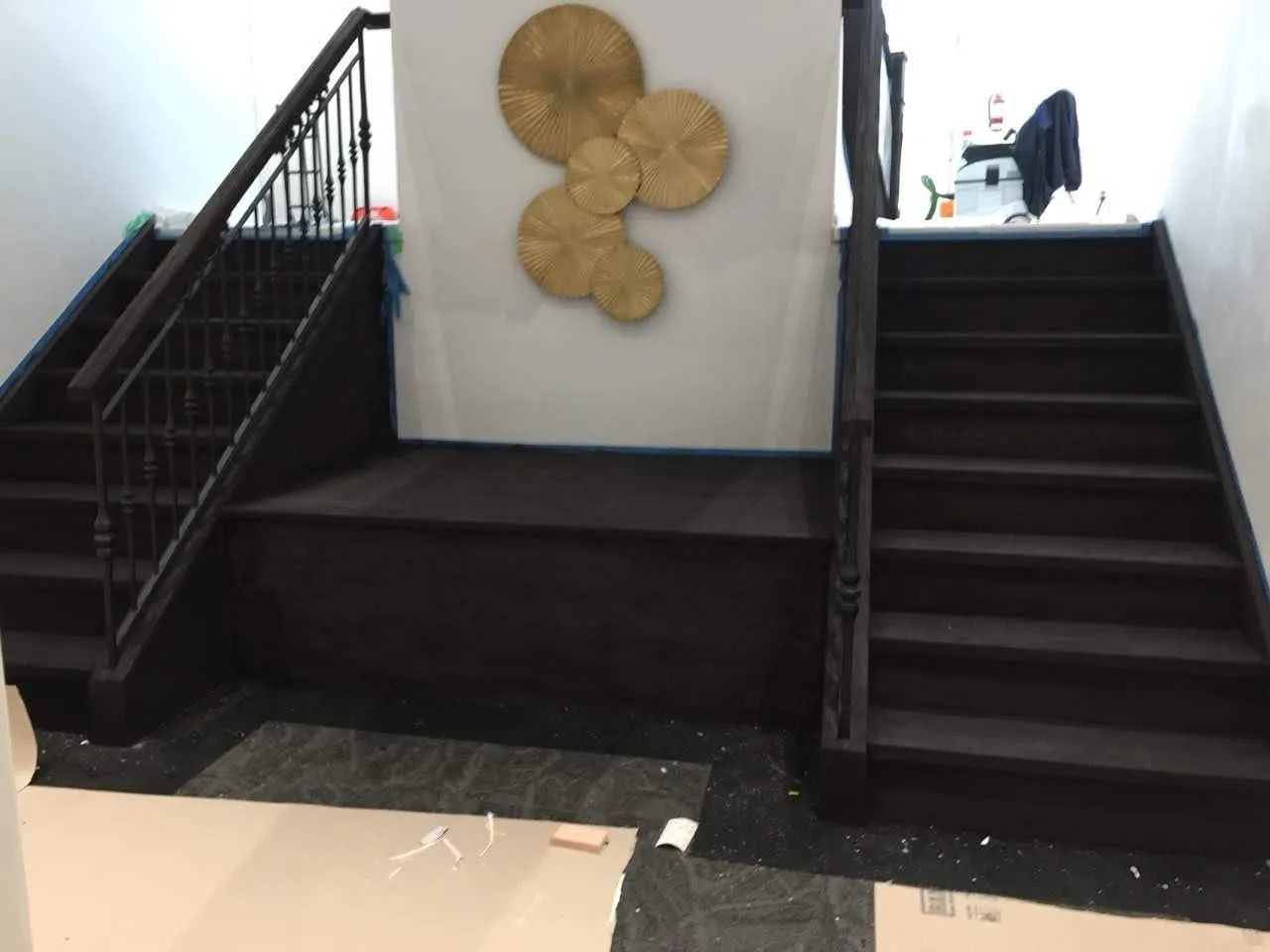
Clear 2K polyurethane, over the stain rather than mixed into it.
Keeping the two separate is deliberate. A tinted topcoat puts the colour in the film, so any wear takes colour with it and any repair means recoating a whole panel. Colour in the timber and a clear film over it means wear removes finish and leaves the colour where it is, and a damaged area can be made good locally.
The clear coat is the same catalysed product used everywhere else here: hard, resistant to kitchen cleaning, and — importantly on a stained finish — non-yellowing. An air-drying clear over a cool-toned stain drifts warm within a few years and quietly undoes the colour decision you made.
Where staining stops being the right call
Three cases, and they cover most enquiries.
Veneer. A face sheet a fraction of a millimetre thick will be sanded through at some corner during stripping, and a veneer sanded through cannot be repaired. Where a customer knows their doors are veneered, we do not quote this.
Softwood. Pine and fir blotch, because the soft early-growth bands absorb far more stain than the dense late-growth ones. A conditioner helps a great deal and does not eliminate it. On trim, most people accept it; on a kitchen where doors sit side by side, the unevenness is conspicuous.
Mismatched timber. Kitchens built in stages, or repaired at some point, often have doors of different ages or even different species. Paint hides that completely. Stain broadcasts it, and no amount of skill makes two species read as one.
How the colour actually gets chosen
Not from a chart, and not in our workshop.
Stain behaves differently on every piece of timber it meets. Species, age, how the board was cut, how much of the original finish soaked into the surface before it was sealed — all of it moves the result, and none of it is visible in a manufacturer's sample card made on somebody else's wood.
So the choice is made on your own doors. One of them is stripped early, and the two or three candidate tones go onto it side by side, on the actual timber, and are looked at in your kitchen in the light you use the room in. A tone that reads warm under a workshop light frequently reads orange under a north-facing window, and that is a discovery worth making on a sample rather than on forty doors.
People change their minds at this point more often than they expect to, which is exactly why the step exists. It costs a door's worth of stripping and it removes the only genuinely irreversible risk in the job — because once the whole kitchen is stained, going lighter is not available.
Staining and painting are the same trade pointed opposite ways
Same booth, same preparation, same crew — and an opposite intention. Painting covers the timber; staining reveals it. Which one a piece wants depends on what the timber is and whether the grain repays being looked at, and there is no general answer. The page above sets the four services beside one another, and which direction a given piece of wood should go is usually settled by looking at the back of one door.
Wood Staining Cost in Vaughan
Priced on the count and on how much finish has to come off, which is why we ask for photographs of the doors rather than of the room. Two kitchens with the same number of doors can differ by a third depending on what is on them.
Profile matters as much as count. A flat or shaker door strips at a predictable rate; a raised panel with a moulded edge has corners only hands can reach.
Sample doors are normal on this service and worth the small cost. Timber varies, and a stain that reads perfectly on a chart can land differently on your particular oak — seeing it on one of your own doors before committing the kitchen is the only reliable test.
Frames are quoted with the fronts. On a solid-wood kitchen there is no version of this where restored doors hang on frames nobody touched.
Questions
Common questions about wood staining in Vaughan
- Can you make dark wood lighter?
- Not with stain. Stain adds colour, it never removes it — anything you put on goes darker than what is there. Stripping takes off the old finish and some of the surface colour with it, and occasionally that is enough. Where somebody wants a genuinely paler kitchen out of dark timber, the honest answer is paint.
- Will it look like new wood?
- It will look like your wood, cleaner. Stripping removes decades of darkened lacquer, and a great deal of what people read as tired orange oak is the finish rather than the timber. What it cannot do is undo sun-bleaching on one door or even out timber that was never matched to begin with.
- Does the grain still show through?
- That is the point of it. Stain penetrates rather than sitting on top, so the figure of the wood reads through the colour, and the clear 2K over it adds depth rather than opacity. If you want the grain hidden you want paint, and it costs less.
- Can you stain over an existing finish?
- No, and anyone offering to is selling you a tinted varnish. Stain has to reach bare timber to penetrate, which means stripping first. That is why this is priced closer to refinishing than to painting — the stripping is most of the work.
- What about softwood trim and doors?
- Possible, with a caveat worth hearing. Pine and fir take stain unevenly — they blotch, because the soft early growth drinks more than the dense late growth. A conditioner before staining evens it considerably but does not make pine behave like oak, and we would rather say that first than have you disappointed.
Not sure what is under your old finish?
Photograph the top edge and the back of one door and we will tell you what the timber is and whether staining is worth doing. A written price follows inside 24 hours and does not change afterwards.
Free in-home consultation · no obligation
Refaced. Repainted. Refinished.